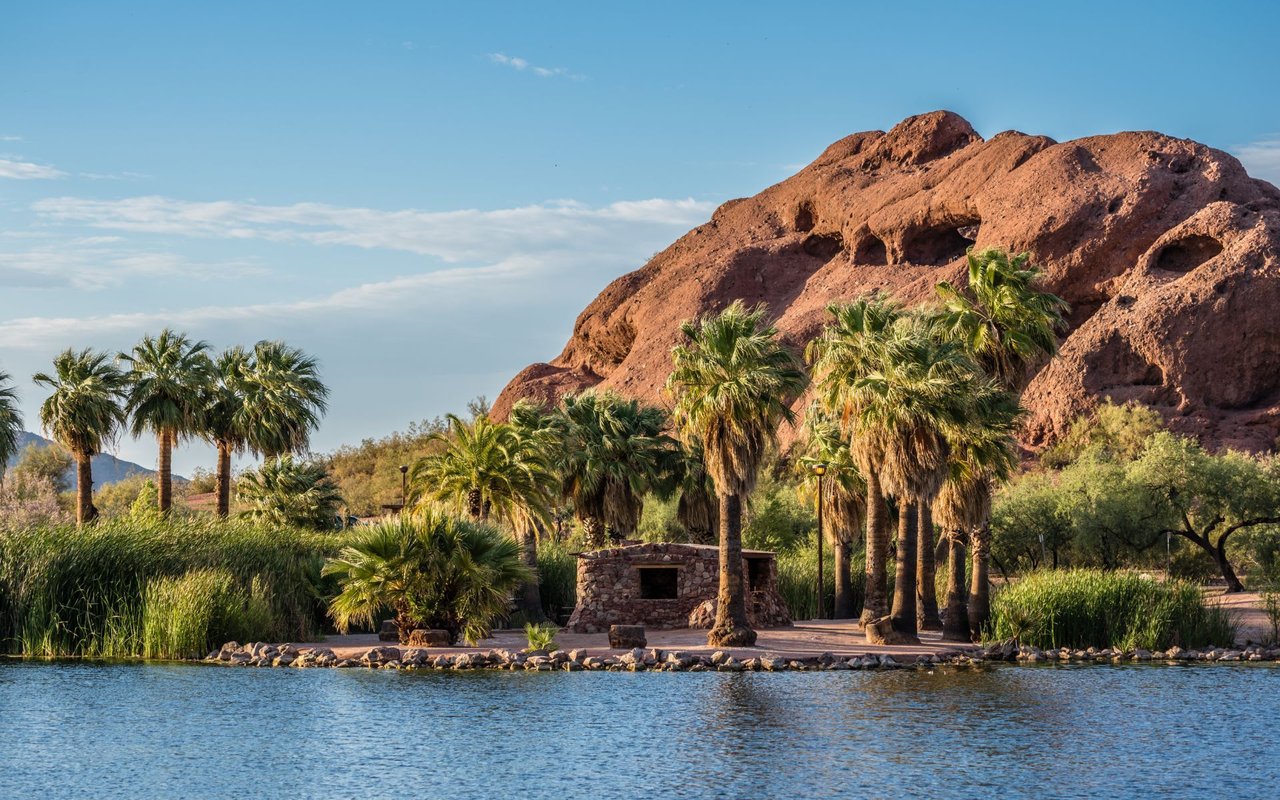
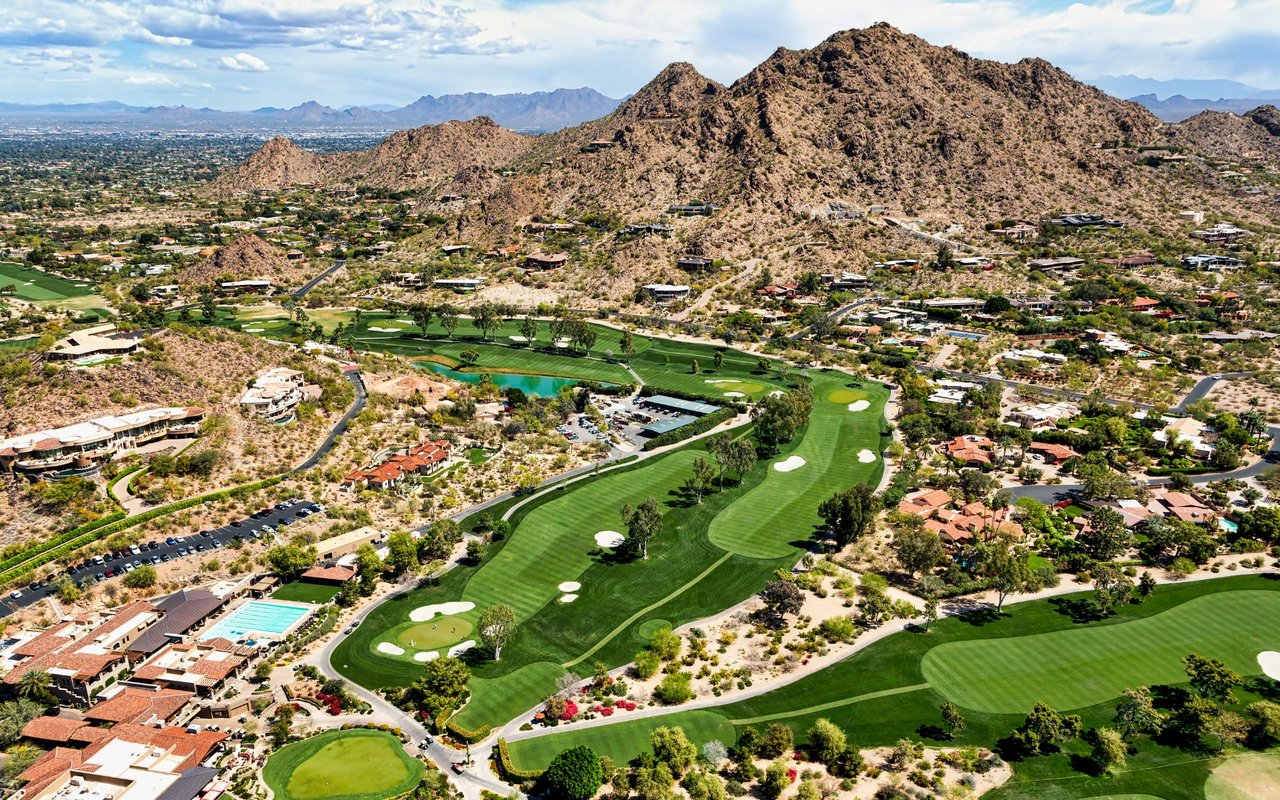
Three of the most consequential residential markets in Arizona sit within four miles of one another, all oriented toward the same mountain. They are routinely discussed as one market. They are not one market — not in price, not in pace, not in what a buyer is actually purchasing.
A seller who prices an Arcadia ranch off of Scottsdale comparables leaves money on the table. A buyer who assumes Paradise Valley behaves like the rest of the Valley misreads a negotiation. The distinctions below are the ones that move outcomes.
What "luxury" means, market by market
The threshold is not portable between markets. In Scottsdale, the luxury segment begins near $1M and holds its highest transaction volume between $1M and $2M — a broad, deeply segmented market of several hundred closings a month. In Paradise Valley, roughly 40 to 60 single-family homes close in a given month, at a median that has been running above $5M, with per-square-foot values pushing past $980 and trophy hillside construction reaching $1,400 to $2,000 per foot.
Arcadia refuses a clean number entirely, and that is the most important thing to understand. A 1955 ranch on an irrigated lot and a $4M new build can share a street. Any Arcadia average is describing two markets averaged into one that doesn't exist.
Arcadia: an architectural inheritance, priced by lot
Arcadia was citrus before it was residential, and the grove infrastructure is still the amenity. Flood-irrigated lots, mature canopy, and a topography that delivers the south face of Camelback are the reason a buyer pays here rather than three miles east.
The architectural record is specific and, increasingly, priced accordingly. Ralph Haver's Windemere brought low-slung rooflines, clerestory glazing, and carport-forward planning to the neighborhood. Al Beadle — the Valley's most rigorous modernist, and the only architect to build a Case Study project outside California — left work scattered through Arcadia and the Camelback foothills. Blaine Drake, one of Frank Lloyd Wright's original Taliesin apprentices, built here as well.
What this means practically: provenance is now a value input, not a footnote. A documented Haver with intact original planning trades differently than a similar-vintage home stripped to studs and rebuilt to a generic contemporary spec. Buyers at this level are asking who drew it. Sellers who can answer, with documentation, are compensated for the answer.
Paradise Valley: the constraints are the product
Paradise Valley incorporated in 1961 for a defensive reason — to protect large-lot residential character from annexation by Phoenix and Scottsdale. The one-acre minimum lot size that resulted, along with a near-total prohibition on commercial development outside grandfathered resorts, is not a zoning footnote. It is the asset.
That scarcity is structural and permanent. It also produces a market that behaves unlike any other in the state:
- A small, selective buyer pool. Fewer transactions means one or two estate sales can move a monthly median several hundred thousand dollars. A single month's figure should never be read as a trend.
- Longer, non-linear timelines. Reported days on market vary dramatically by source and reporting window. Well-positioned homes still transact in a normal window; mispriced ones can sit past 150 days without any signal of distress in the underlying market.
- Cash at the top. A significant share of high-end closings involve no financing, concentrated among out-of-state buyers relocating from California and the Northeast.
- View corridors and hillside constraints. Elevation, ridgeline protection, and building-envelope limits determine what can be built and what a view is worth. This is diligence that has to happen before an offer, not after.
Scottsdale: not one market, but eight
Scottsdale's breadth is why blended Scottsdale data is close to useless for a specific decision. The relevant unit is the sub-market:
- Silverleaf — the tightest inventory and the most consistent global demand at the top of the range.
- DC Ranch and Gainey Ranch — steady, well-established $2M–$5M activity with a defined community structure.
- Troon and North Scottsdale — the new-construction corridors along Pima Road and the 101.
- The Waterfront — urban-format luxury, a different buyer entirely from the estate market.
Each carries its own absorption rate, buyer profile, and HOA and architectural-review regime. Reading them as one number is how sellers arrive at the wrong list price.
What the 2026 data is actually saying
Inventory across the corridor's luxury tier is higher than it was during the scarcity years. Days on market have extended. Price reductions are more common, and above $3M there has been real negotiating room, with some sellers accepting meaningfully below asking. Sale-to-list ratios sitting in the 96–98% range describe normal negotiation in a high-end market — not weakness.
The correct read is selectivity, not softness. Buyers have genuine alternatives within a price band and neighborhood, which means side-by-side comparison is easy and weaknesses surface fast. The homes that clear are the ones that are precisely positioned on architecture, lot, and view, and priced with day-one discipline.
If you're selling
- Price to your home's specific band and sub-market, not to a municipal average.
- Document provenance. Architect, original plans, permit history, renovation scope — assembled before listing, not requested during escrow.
- Treat presentation as non-negotiable. At this level, film, photography, and copy are the comparison set.
- Understand that your outcome will reflect your own pricing and positioning, not the market's average pace.
If you're buying
- Have proof of funds or jumbo pre-approval in hand before requesting showings above $5M.
- Run view, ridgeline, and building-envelope diligence in Paradise Valley before writing.
- In Arcadia, confirm irrigation rights and schedule — they materially affect lot use and cost.
- Ask what isn't on the MLS. In a corridor this small, a meaningful share of the best inventory transacts privately.
Questions we're asked most
Is Paradise Valley or Scottsdale the better buy right now? They answer different questions. Paradise Valley buys scarcity — one-acre minimums, permanent build-out limits, and a market that cannot expand. Scottsdale buys optionality: more inventory, more sub-markets, and more room to trade a view for square footage or a newer build.
Why do Arcadia homes vary so much in price? Because the inventory is genuinely mixed. Original ranches, restored midcentury work by named architects, and ground-up new construction all trade under the same neighborhood name. Value is set by lot, provenance, and condition — not by an Arcadia average.
Is now a difficult time to sell at the high end? It is a demanding one, not a poor one. Buyers have alternatives and are comparing carefully. Homes that are accurately priced and genuinely distinguished still transact well.
[CTA block]
We work the Camelback corridor across all three markets, including inventory that never reaches the MLS. If you're weighing a move — this year or in three — a conversation about your specific block and price band is worth more than any market average.
Request a private market assessment